
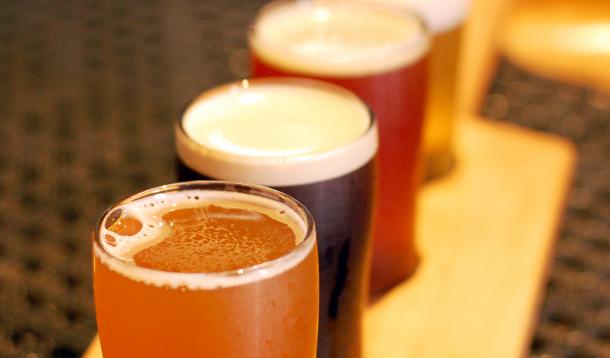
Now scientists have found that the characteristic smell of beer is really meant to attract fruit flies.
Yeast and fruit flies have evolved a mutually beneficial relationship that hinges on that smell, according to new research.
Yeast produce small quantities of volatile compounds that give beer a pungent smell that’s somewhat like ripening fruit. Scientists have already pinned down a particular gene that’s responsible for most of these aromas.
In a new study published today in Cell Reports, bioengineer Verstrepen and his team at University of Leuven and the Flanders Institute for Biotechnology in Belgium looked closer at how fruit flies react to the mutant beer yeast. They sent the flies into a cage; as expected, the fruit flies showed a strong preference for the smelliest yeast and didn’t pay any attention to the non-fruity yeast air.
Both species gain from this aromatic attraction, according to Verstrepen, and it’s a relationship that’s likely been around for millions of years. Fruit flies eat yeast for protein, and the scents help lure them to the source. In exchange, yeast use fruit flies to hitch a ride and disperse to new habitats.
Because yeast can’t move around on their own, he says, they probably developed this strategy as a way to escape nutrient-poor environments and migrate to nutrient-rich places that fruit flies frequent, like ripe fruit or rotting trash.
The aroma-based symbiosis may also apply to other microbes. “It’s possible that this type of relationship is actually really common,” said Verstrepen, “We think that some pathogenic microbes may even use this strategy with insects.”
Brewers ordinarily detest fruit flies because the insects can carry unwanted microbe species with them. But there’s a new trend among beer-makers called ‘wild fermentation’ that lets microbes spontaneously colonize the batch to achieve a more local flavor. “You could catch a few flies in your vineyard, put it in your grape juice, and make a very unique wine,” said Verstrepen.
(via Wired)
