
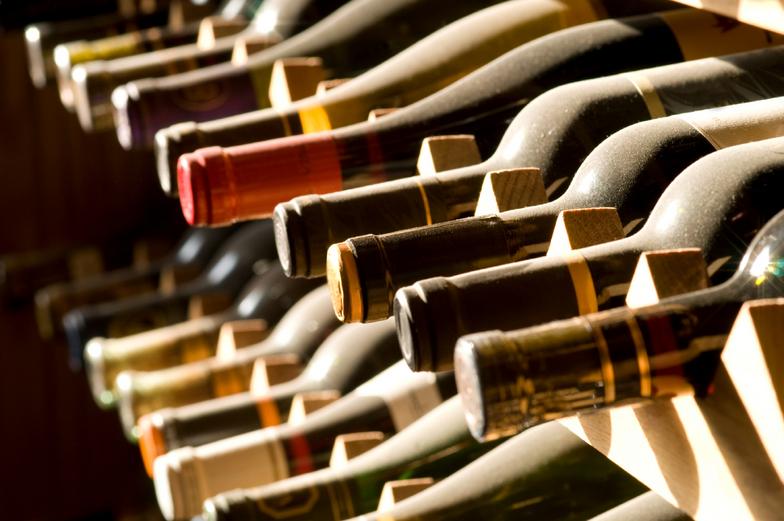
The process in which a select few generally more expensive wines become better with age has long been, even to this day, steeped in mystery.
The time it takes for any wine to reach its peak in taste, for instance, depends on several factors, such as grape variety as well as the region and season from which they were harvested. Even bottles made from the same batch will each have their own distinct composition of acids, fruity esters and astringent tannins that interact and evolve ever so slowly, giving a mature wine its deep complexity.
So it’s quite remarkable then that a number of devices, introduced in recent years, are able to achieve in minutes that which would normally take sometimes decades. Well, that’s the claim at least.
But perhaps the most notable among these gadgets is the Clef du Vin, a pocket-sized stainless steel plate with a tiny disc, made of copper alloyed with gold and silver, located near the tip. The combination of metals, dipped into a filled glass, is said to initiate a chemical reaction that removes sulfide, a preservative known to adversely affect the taste, as well as hasten the oxidative process in a manner somewhat akin to wine aging.
The concept isn’t entirely far-fetched as it’s been shown that various materials, such as copper, can noticeably impact how wine tastes, though the notion that any agent can simulate actual aging has been dismissed largely as little more than pseudoscience in many wine circles.
Keith Wallace, a winemaker and founder of the Wine School of Philadelphia, can point to at least a few phases of the natural aging process that’s simply not replicable through artificial mechanisms, like for example, the methodical way acetobacter, a microorganism, converts some parts into vinegar.
He also added that besides common practices, such as decanting to removing sediment or simply aerating to dispel some of the astringency and bitterness, there’s ultimately little else that can be done to “optimize” wine. “Ninety nine percent of wines have been aged long enough by winemakers to where they’ve already at their peak,” he says. “The bottom line is that there’s no aftermarket customization of wine. It’s a fixed product.” “Wine is pretty much pH stabilized once it’s sold in the bottle,” he says. “So I just don’t see how you can improve it to where it transcends certain limitations that are inherent, like the quality of the grapes used and the winemaking that went into it.”
(via WashingtonPost)
