
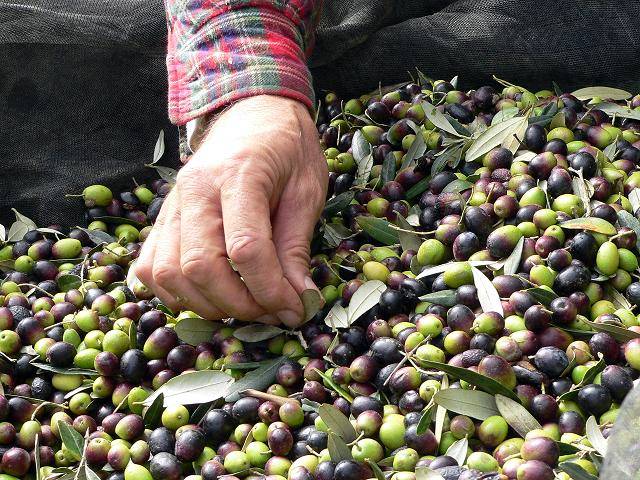
A dreadful 12 months for olives in several major producing countries has led to 2014 being labelled the “black year” for the industry and to the doubling of the bulk cost of olive oil in some areas.
“This is the worst year in memory,” said Pietro Sandali, head of the Italian olive growers consortium, Unaprol.
In Greece, the olive output has been more stable, but the other smaller producing countries cannot pick up the strain: Morocco and Tunisia have also suffered bad weather, while Syria, which claims to be the birthplace of the olive tree and which has 74 million trees, has been affected by the civil war.
The International Olive Council (IOC) says production will hit its lowest level in 15 years and admits there will be an upswing in prices; its latest figures show the price from the producers had risen by 121% in the last month of 2014 compared with December 2013, with supply down by almost a third. That increase, the experts say, is likely to be passed on at the supermarkets, meaning a bottle of olive oil is likely to cost British shoppers more than a high-end bottle of wine.
But worst hit will be the farmers and the economies of the olive oil-producing countries, all of which are still struggling to emerge from several years of dire economic straits. The olive oil industry is worth more than £2bn to southern European producers.
Curtis Cord, publisher of the Olive Oil Times, has called the situation “particularly painful”, adding that millions of people rely on the industry in Spain, Italy, Greece, Portugal, Morocco and Tunisia. “This has a profound, profound effect on families and producers in these regions, so it is a crisis,” he said. “That’s one of the unfortunate parts of producing olives and olive oil. It’s cyclical: you’re going to have bad years and good years.”
Spain and Italy account for just under 70% of output, and the Madrid-based IOC, which publishes benchmark supply and demand estimates, forecasts that Spanish olive oil production will more than halve next year, to 825,700 tonnes. Production in Italy is expected to fall about a third to 302,500 tonnes, the lowest level since 1991.
Olive oil comes in so many different types and qualities of pressings that it is difficult to compare prices, but broadly it varies from around £4 a litre in Aldi to £6.50 at Waitrose.
However, Europe, where two-thirds of the world’s olive oil supply is consumed, will have cheaper alternatives. Favourable weather elsewhere in the world has meant that harvests of oilseed crops have been plentiful and prices have been falling. The future could also see olive oil coming from the US, where more and more landowners in the increasingly climatically challenged states of California and Texas are planting olive trees.
(via TheGuardian)
